Grandfather and grandson reading together

In the end we all become stories.

Your Life.
Told In Your Own Words.

I sit with you. I listen. I write your story myself — no software standing between your words and the page.

"After nourishment, shelter and companionship, stories are the thing we need most in the world."

— Philip Pullman

Chapter 17 — Motherhood

Woman
with Child

My son is sleeping next to me. He is five months old. His lips are full from feeding and his tiny hands are open in trust. The wind howls and beats and whistles against the window. We are buffered by a down duvet and a thin sheet of glass. Survivors of a shipwreck; there we are, child with child.

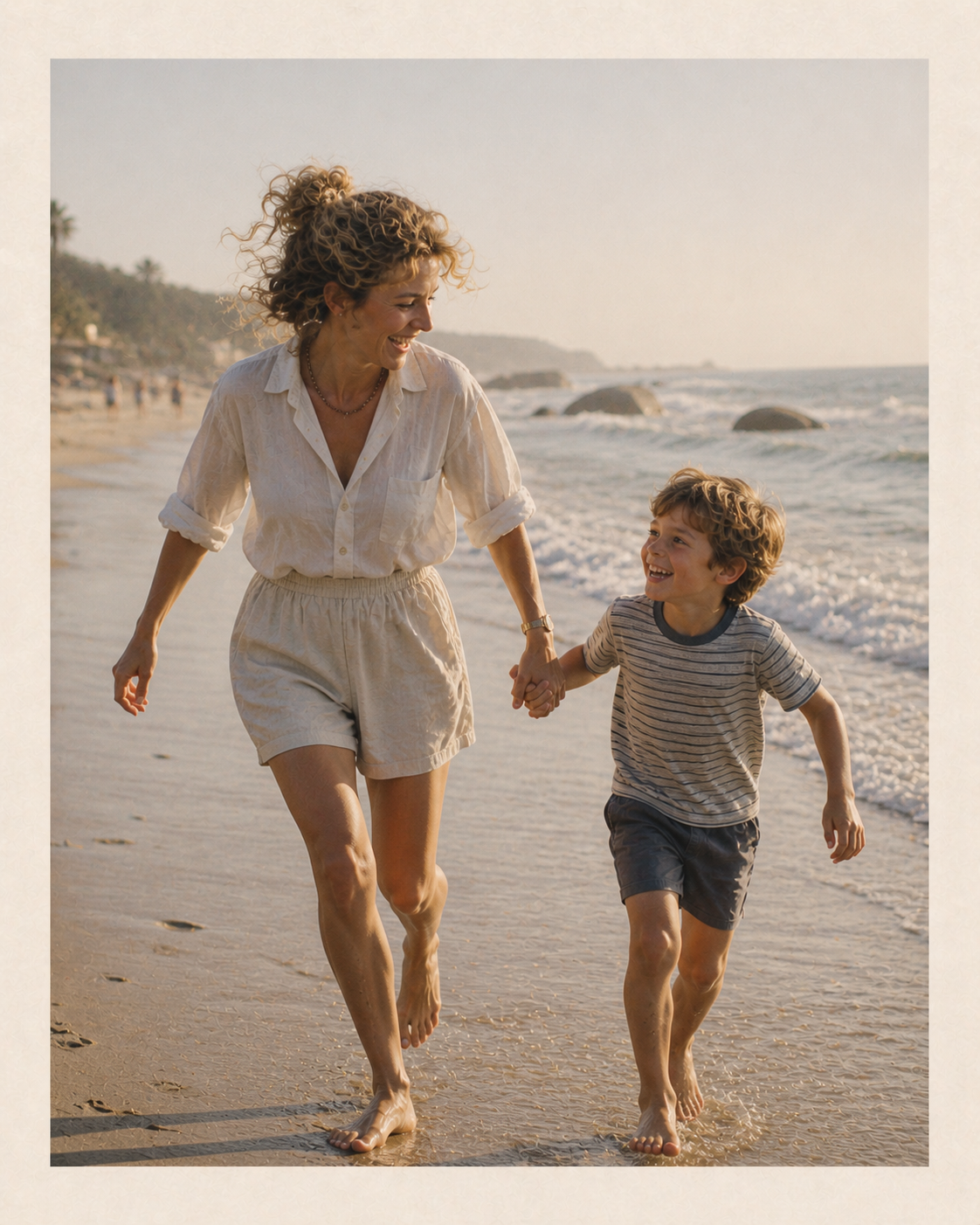
Sasha is four now. He is sleeping next to me. Here we are — woman with child.

What happened in those four years? Everything. Nothing. The most exciting chapters have involved the smallest steps: a tooth, a good morning kiss, the first “I love you” — and the second, and the third and the fourth.

The word mommy still sometimes stops me in my tracks. I press it and push it and study its reflection in the mirror in awe that I am She.
47
Camps Bay, 1984. Sasha, four years old. “My mother,” wrote Maya Angelou “was like a hurricane in its perfect power.” I am that hurricane. That perfect power. Strong. Proud. Unstoppable. My son has taught me everything I know about life.
48
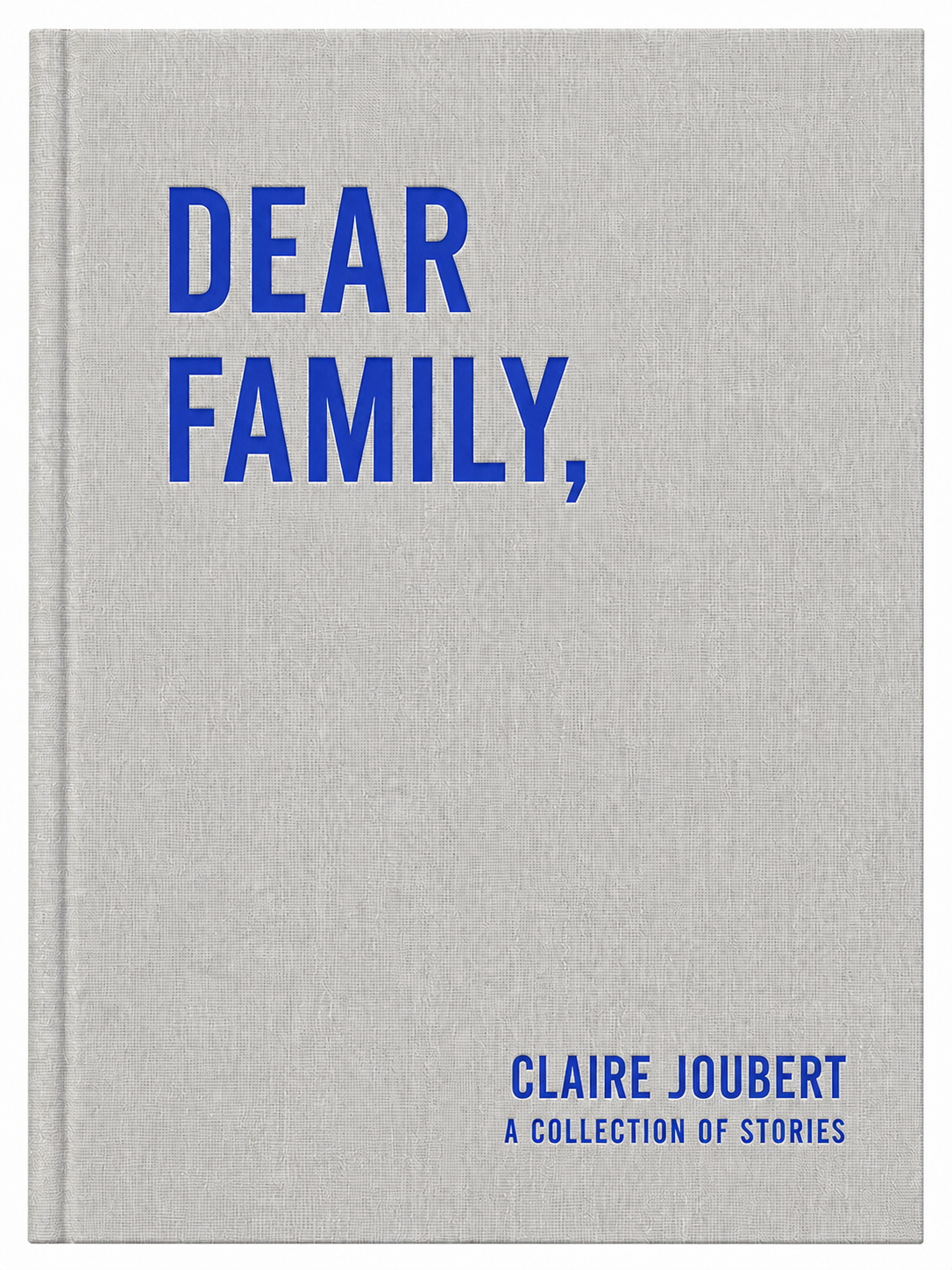
Dear Family — Claire Joubert
Discover more

Most people never write their story down. Not because they don't want to. Because sitting alone in front of a blank page is the hardest way to do it.

You talk. I listen. I write.
That's the whole process.

Dear Family — Claire Joubert, a collection of stories

You Already Have the Stories

Your stories don't need to be created. They need to be uncovered — in conversation, not alone at a keyboard.

Book a free discovery call →

The Process

A Real Person, From Start to Finish

No app to download, nothing to fill in on your own. You talk to me. I do the rest.

01

Book a free discovery call

We talk for fifteen minutes about your story and what you're hoping for. No obligation, no pressure.

02

I interview you — in person or by video call

We meet as many times as your story needs — face to face, or over Zoom. You talk. I ask the questions.

03

Every word is transcribed

Your recording becomes a full written transcript, ready to be shaped into chapters.

04

Images are included

You hand me your photographs. We caption them collaboratively.

01

Book a free discovery call

We talk for fifteen minutes about your story and what you're hoping for. No obligation, no pressure.

02

I interview you — in person or by video call

We meet as many times as your story needs — face to face, or over Zoom. You talk. I ask the questions.

03

Every word is transcribed

Your recording becomes a full written transcript, ready to be shaped into chapters.

04

Images are included

You hand me your photographs. We caption them collaboratively.

See what your stories become…

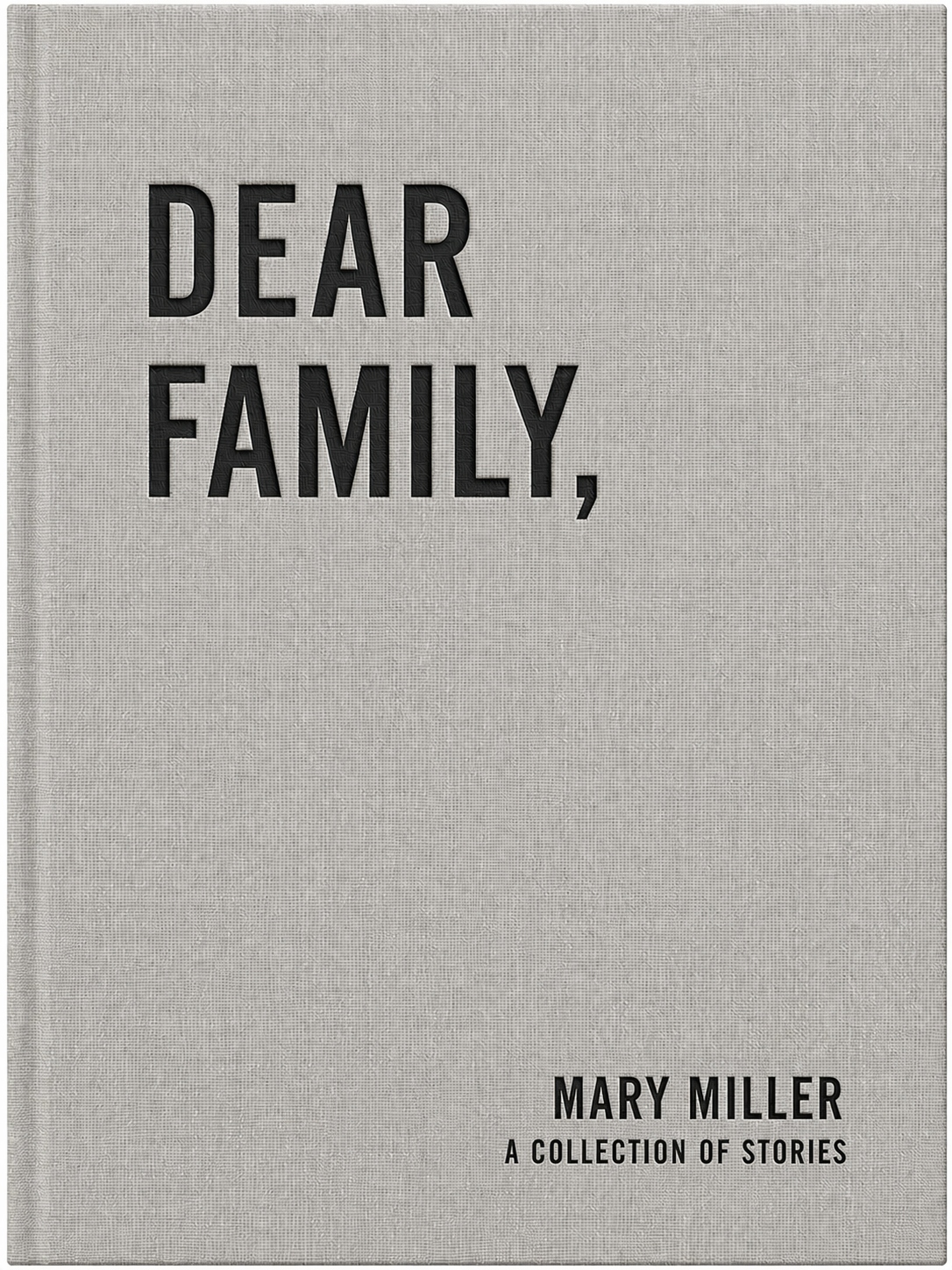
Book cover
Mary J. Miller
1

This book is dedicated to everyone I have known and loved in the long, complicated, ordinary miracle of a shared life.

2

"Make up a story. For our sake and yours forget your name in the street; tell us what the world has been to you in the dark places and in the light. Don't tell us what to believe, what to fear. Show us belief's wide skirt and the stitch that unravels fear's caul."

Toni Morrison, Nobel Prize Lecture, 1993

3
I Got It From
My Mama

There is a particular way my mother entered a room. Not loudly — she was never loud — but with a quality of attention that made you feel the room had been waiting for her. She noticed things. The cup left on the wrong shelf. The child sitting slightly apart from the others. The conversation that needed redirecting before it became something else. I did not know, for many years, that I had inherited this quality. I thought I was simply paying attention. It took my eldest daughter, at seventeen, watching me across a dinner table, to say: you do exactly what Grandma Sylvia did. You scan the room. You always know where everyone is. And she was right. I do. I always have.

4

What we inherit from our mothers is rarely the thing we expect. We think of it in terms of objects — the ring, the recipe, the handwriting on a card kept in a drawer. We imagine inheritance as something handed over deliberately, with ceremony, in a moment of understood significance. But most of what I got from my mother arrived without announcement, slipping into me the way water finds its level: the slight forward tilt when listening to someone who is struggling to find their words, the specific way of folding napkins that I cannot do any other way even now, the habit of noticing who has not been thanked, the absolute inability to leave a gathering without checking that nobody is standing alone.

She was a woman who held things together by noticing them. A family is not held together by love alone — love is easy; love is the given. What holds a family together is the continuous, invisible labour of attention. Who has gone quiet. Who is eating too little. Who needs to be asked something in private that they cannot say in the room. This was my mother's particular genius, and she never named it or claimed it as such. It was simply what she did. What I watched her do, every day of my childhood, without understanding that I was learning.

5
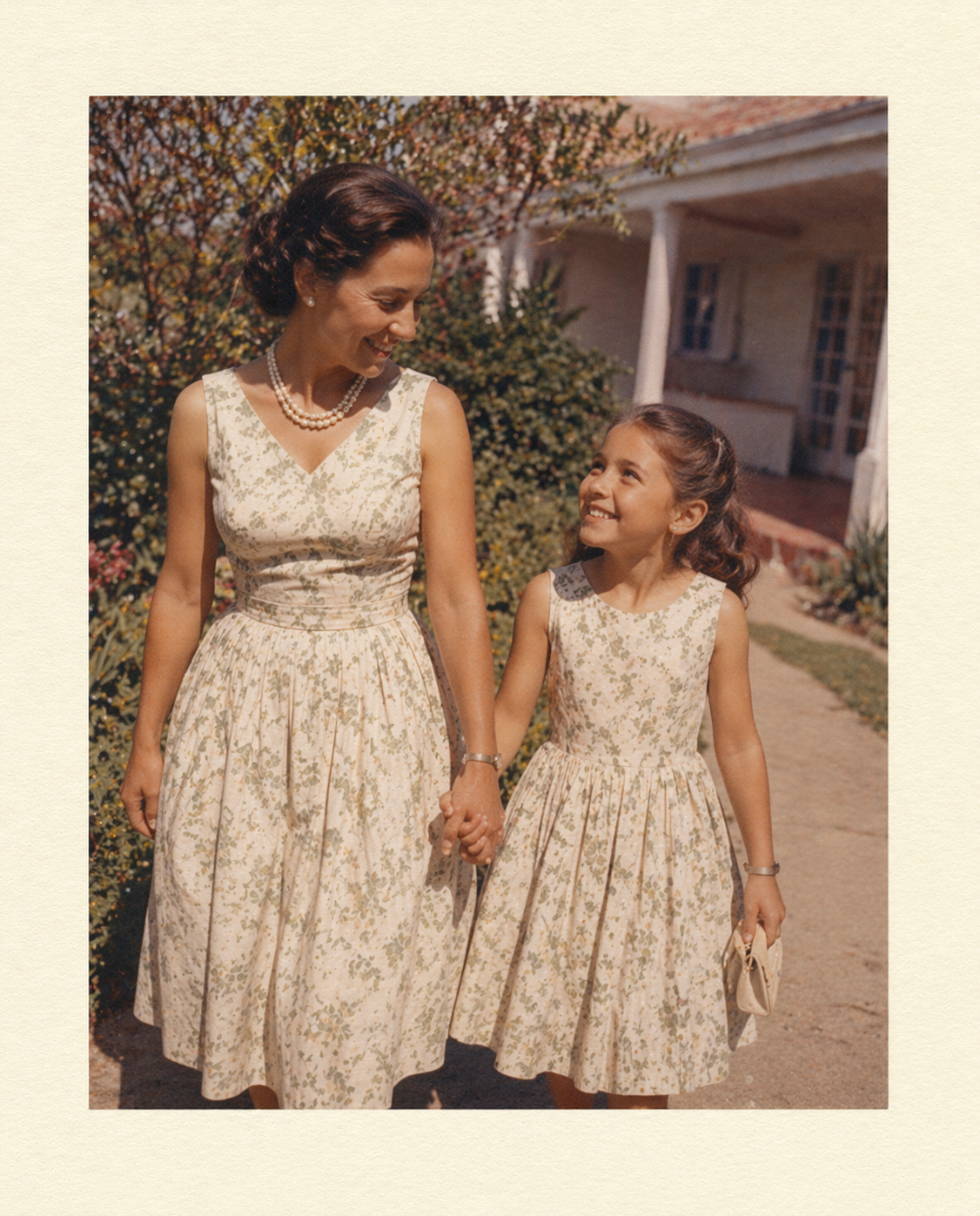
Spring, 1963, our house in Gardenia Crescent, Milnerton. Me, aged 8, with my mother, Sylvia. The fabric had been bought on a Saturday morning at Spraklins – one bolt, two dresses. Mom's idea, but I wore mine until it no longer fitted. Then I kept it anyway.
9
A Dialogue Between
the Moon
and Stars

When I was very small I believed, with the certainty that only very small children can believe things, that the sky was a conversation I was not yet old enough to understand. The stars were not decorative. They were communicating. They had been doing so long before any of us arrived, and they would continue long after, and the fact that we had not yet learned to listen was our failing, not theirs. I told my grandfather Solly this one evening when I was about seven, lying on my back in the grass while he sat nearby in a folding chair. He put down whatever he was reading and looked at me for a long moment. Then he said: you might be right. Let's keep listening.

10
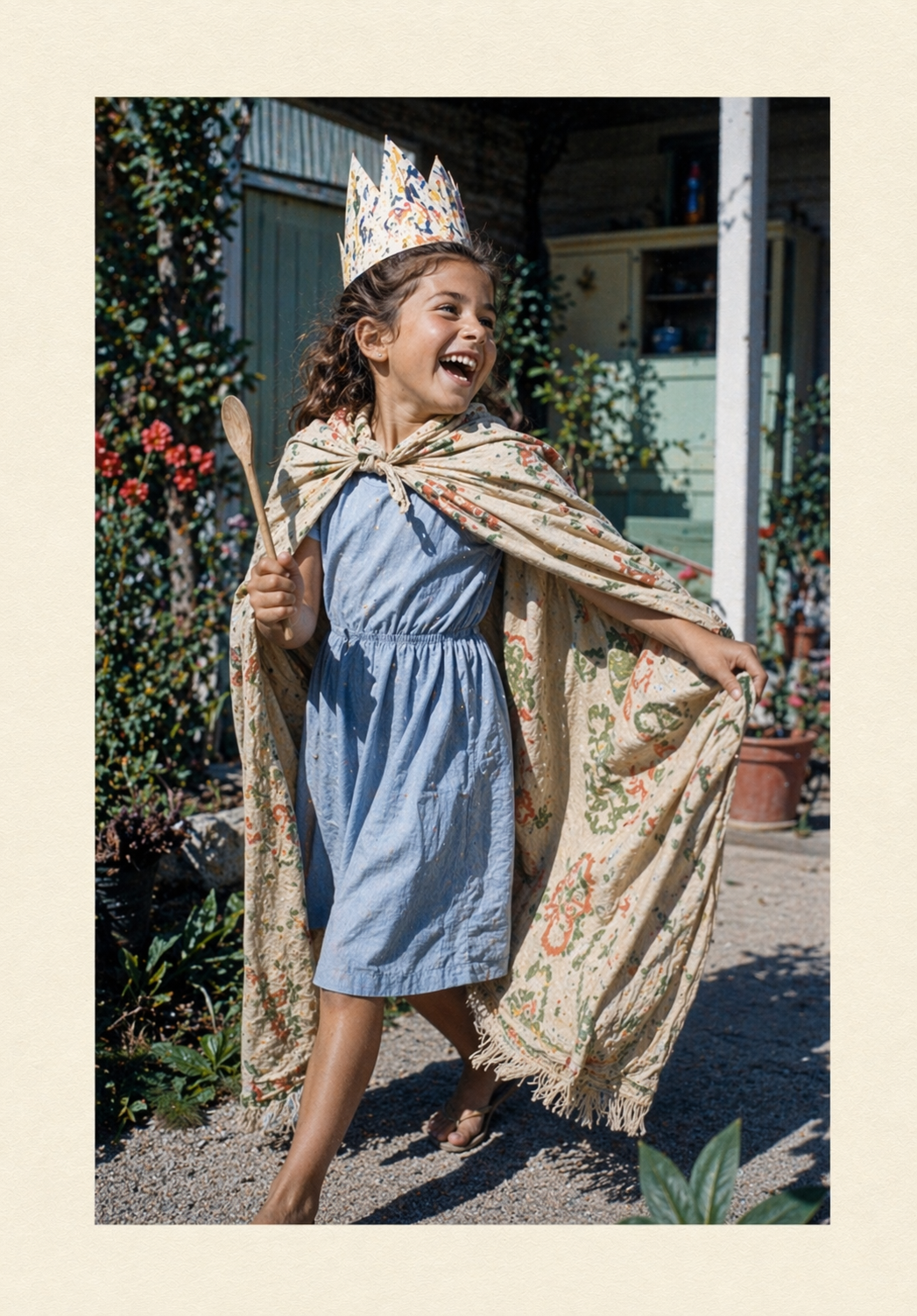
Circa 1964. Probably on my way to a fancy-dress party. But I didn't need an excuse. The crown might have been a cereal box and the cape, an old curtain, but I was the self-declared Queen of the Back Garden and sole ruler of everything beyond the stoep.
14
Non-Returnable
People

There is a kind of person who exists in every family — the one who cannot be discussed neutrally, who generates a particular charge in the room simply by being mentioned, who is loved or resented or feared or pitied or, most usually, several of these at once. Every family has its version of this person, and most families have several. They are the ones the stories always circle back to, the ones whose names come up at the wrong moment with the wrong weight, the ones who left something unresolved that the family is still carrying, decades later, like an account that was never properly settled.

15

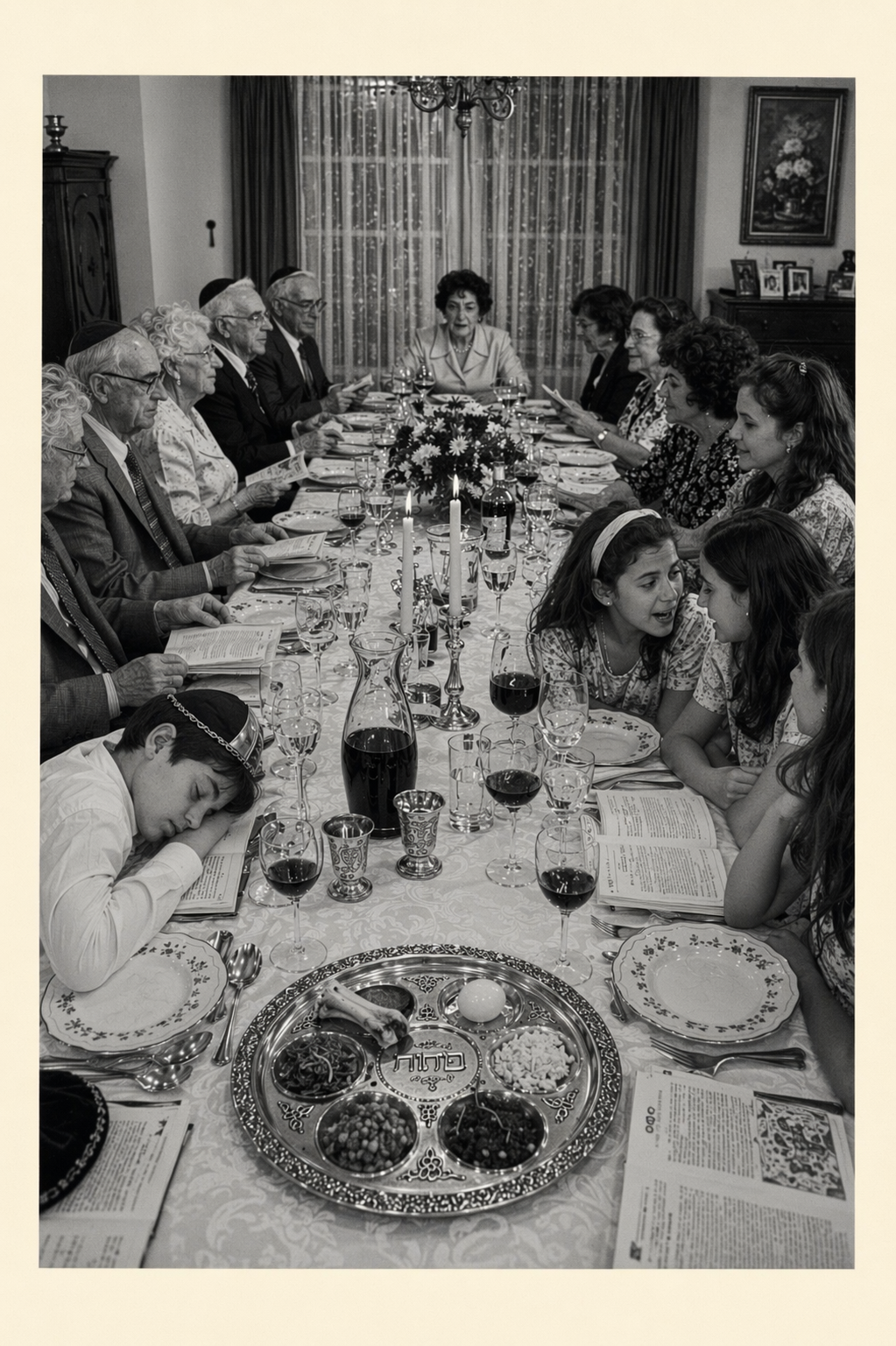
The first seder without him, she took his seat at the head of the table without being asked and without announcing it. She simply sat down there, opened the Haggadah to the first page, and began. If she looked at the chair to her right — his chair, for forty-one years his chair — she did not do it where anyone could see.

I was eleven that year. I was sitting halfway down the table next to my cousin Sharon, and we were, I am not proud to say, talking about something entirely unrelated to the Haggadah. I remember the sound of Bobbe Rivka's voice beginning the first paragraph — she had a reading voice that carried without effort, the voice of someone who had grown up in a house where reading aloud mattered — and the way the table went quiet around it.

17
Pesach, April 1967, Sea Point. The Miller Family seder – the first without grandpa Hershel. Bobba Rivka, aged seventy-two, took her place at the head of the table without discussion and led every word from memory.
20
Books and
Smoking Guns

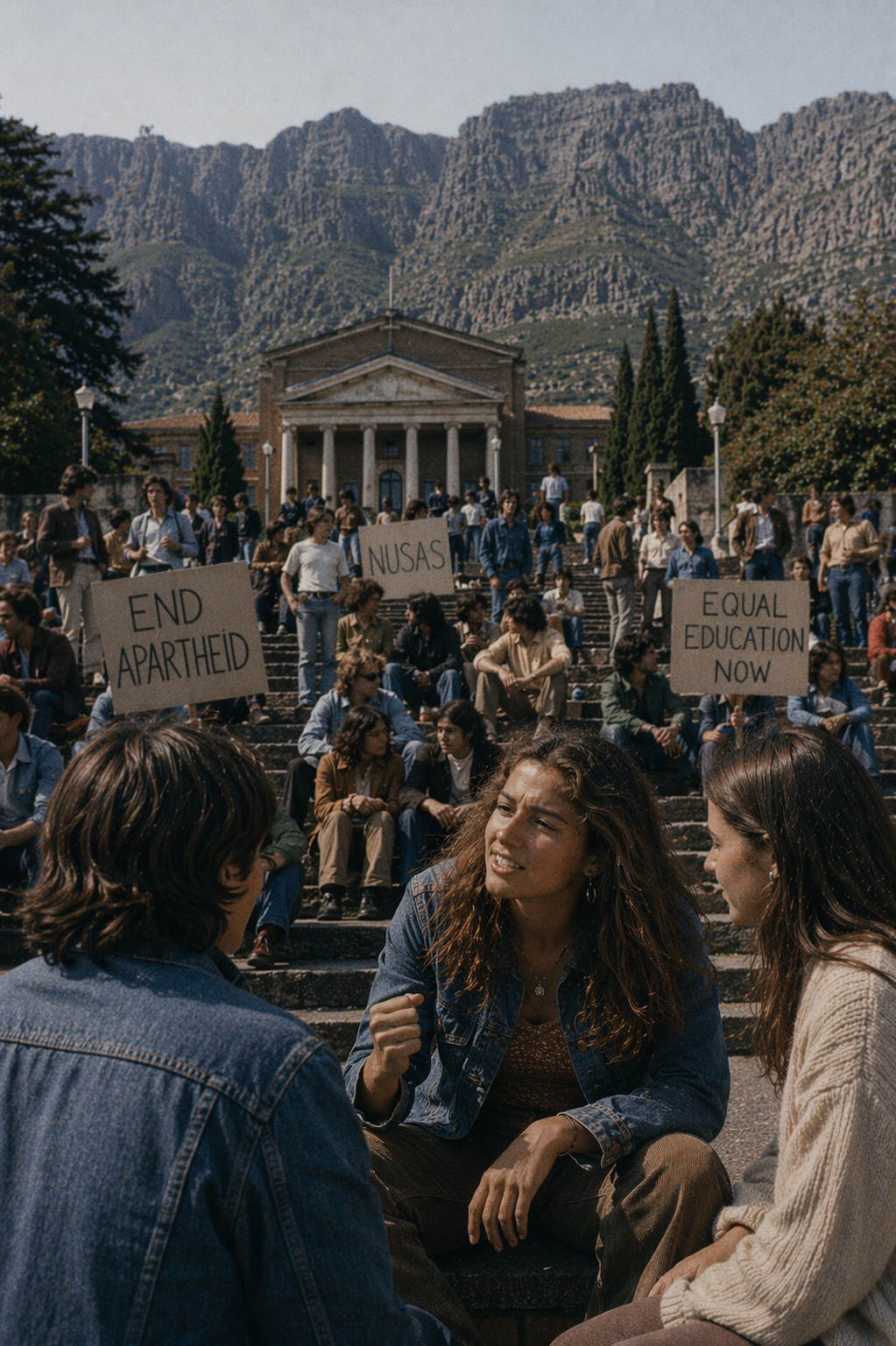
The University of Cape Town sits on the slopes of Devil's Peak in a way that is not accidental. It was built to look authoritative — the wide stone steps of Jameson Hall, the mountain rising above it, the long view down over the city and the sea. It was built to say: here is where things are known, where the important thinking happens, where the future is made. This is exactly the kind of architecture that is useful to protest against, which is why the steps of Jameson Hall became, in the early nineteen-seventies, one of the most politically charged surfaces in South Africa.

21
August 1974, The steps of Jameson Hall, University of Cape Town. We gathered in support of the UCT Wages Commission, calling for a living wage for the university's Black workers. I was a second-year Psychology student. I had a lecture at two o'clock. I didn't go.
26
A Bride Married
to Amazement

I have never been particularly good at faith in the conventional sense. This is not something I say proudly — it is simply true, a fact about my particular way of being in the world. I find it difficult to maintain conviction about things I cannot, in some sense, verify. What I have, instead of faith in the conventional sense, is something harder to name: a recurring, involuntary sense of amazement at the fact that any of this exists at all. That there is something rather than nothing. That the Cederberg sky is actually that sky, and not a lesser one.

27

What I said yes to, that morning, was not fully knowable in advance. This is the nature of the commitment: you are agreeing to a future you cannot see, with a person you do not yet completely know, on the basis of a present that is already more than you had expected. It requires a particular kind of courage that is different from the courage needed for most things — not the courage to act in the face of known risk, but the courage to act in the face of necessary uncertainty.

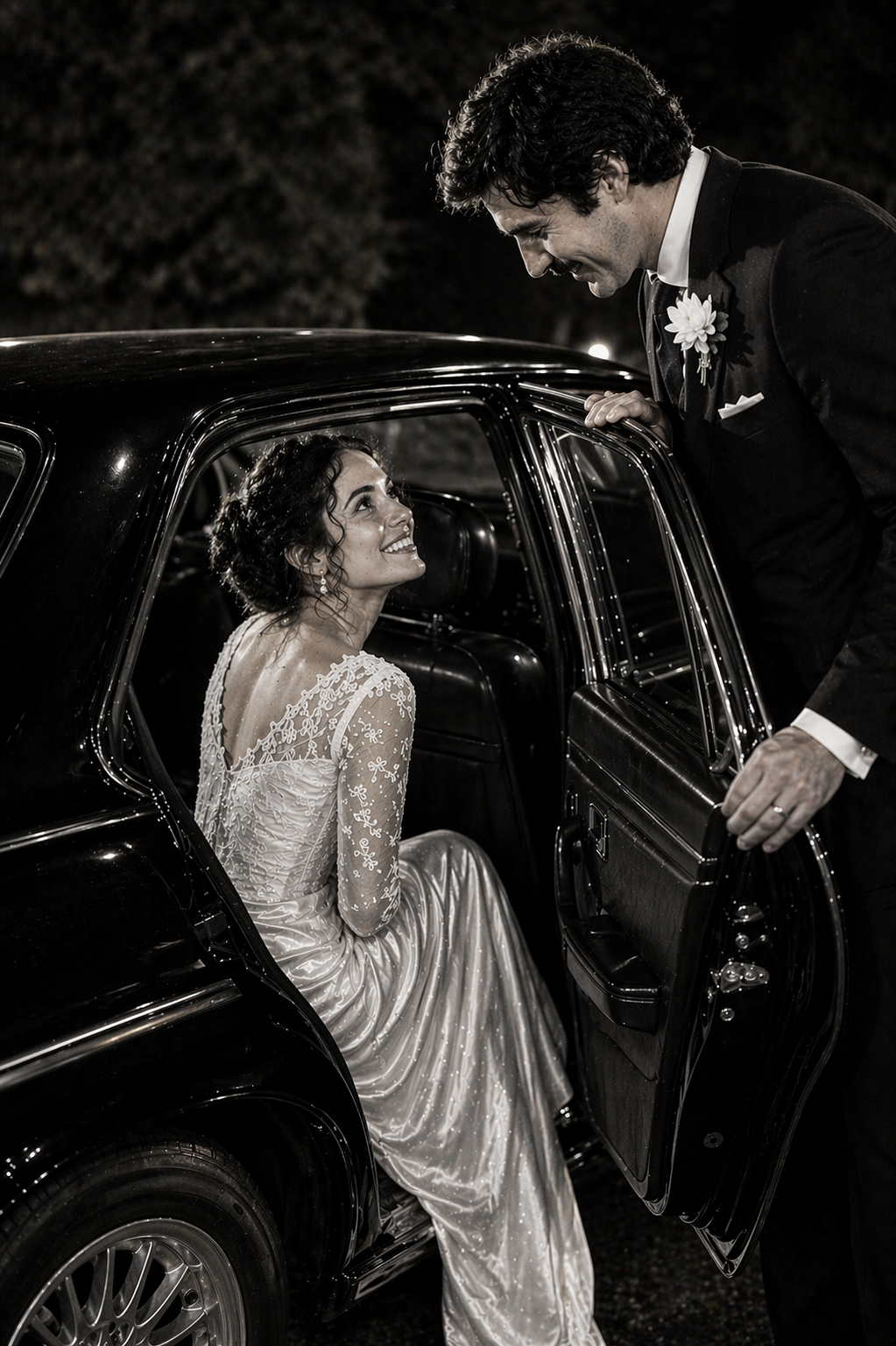
That morning it was beautiful. I gathered my dress at the car door — David had hired a white BMW that was too large for the parking bay we had been given and had spent twenty minutes solving this problem while I waited with my mother in the anteroom — and I looked at him holding the door open and laughing at something, and I thought: this is the person.

29
15 August 1982, Cape Town. David charmingly holds the door open as I gather my wedding dress for the last time. We were on a six o'clock flight to Mauritius. The destination was a surprise.
31
What I've Learned:
A List of Brave
and Startling Truths
I Hope You'll
Carry Forward
143
  1. Pay attention. It is the most radical act available to you and the one most consistently abandoned in the name of efficiency.
  2. The people who are difficult to love are usually the ones who most need it. This does not mean you are obliged to love them. It means it is worth trying to understand them before you give up.
  3. Your body knows things before your mind does. Learn to listen to it before it has to shout.
  4. Grief is not a problem to be solved. It is a measure of how much something mattered. Treat it accordingly.
  5. Most arguments are not about the thing they appear to be about. The skill is finding out what they are actually about, which usually requires stopping talking and listening instead.
  6. The version of yourself you are most afraid to show people is, more often than not, the most interesting one.
144
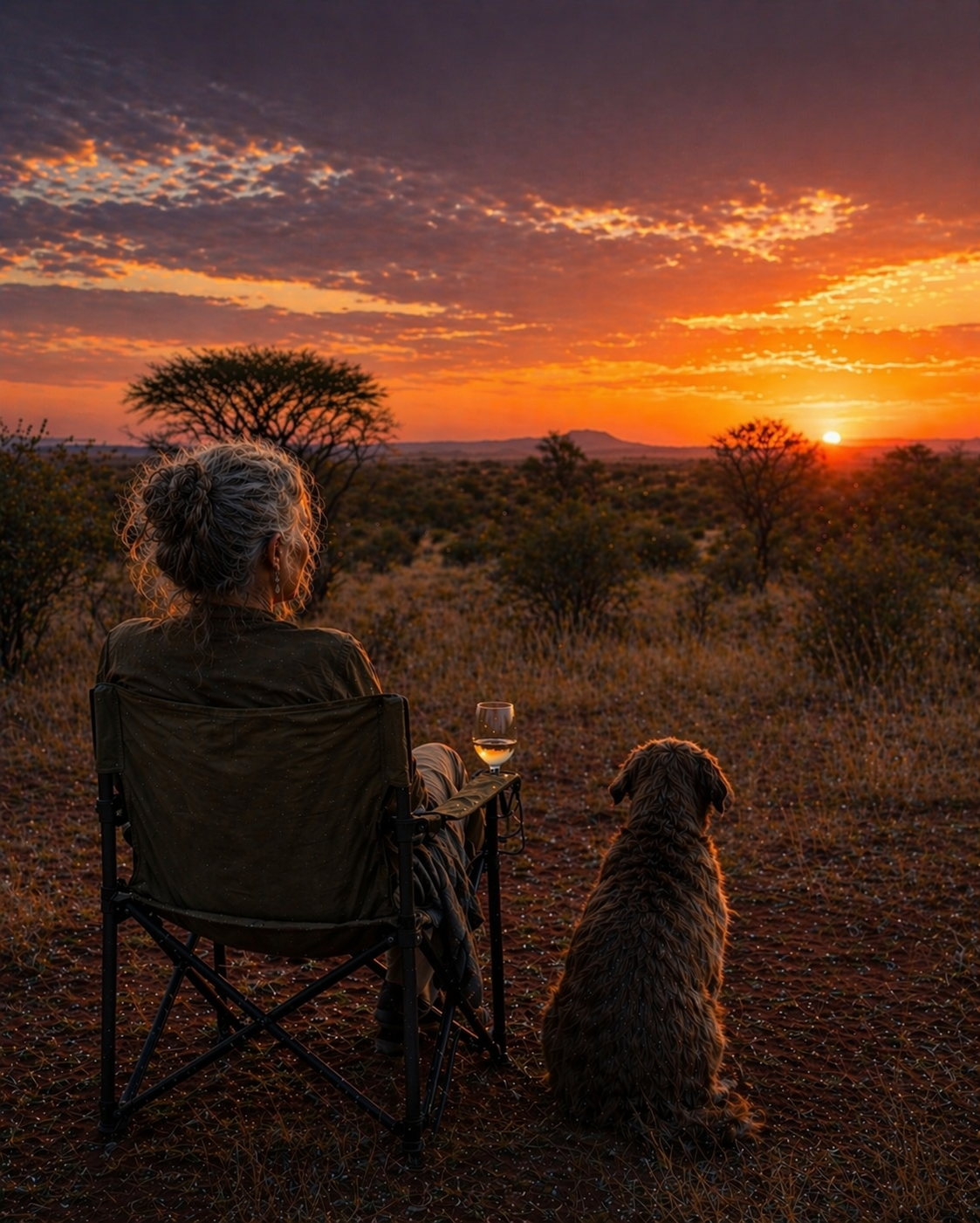
July 2025. Timbavati Private Nature Reserve, Limpopo. Amen, and I, at the end of the dry season in the camp I've been returning to since 1993. The sun takes its time going down in the bush. I've never once wished it would set sooner.
148

1 / 17

Choose a colour for your cover title.

Your Stories Become a Book

Every project ends with a manuscript — and in almost every case, a beautifully printed book to go with it.

Exactly what that looks like — manuscript only, or manuscript and a printed hardcover, with or without photographs — is discussed and quoted individually on your call. There's no fixed package; every project is different.

  • Every story interviewed, transcribed, and written by me
  • Your voice preserved
  • A written manuscript
  • Illustrated with captioned photographs
  • A printed hardcover book — discussed and quoted individually
  • Your dedication, printed inside
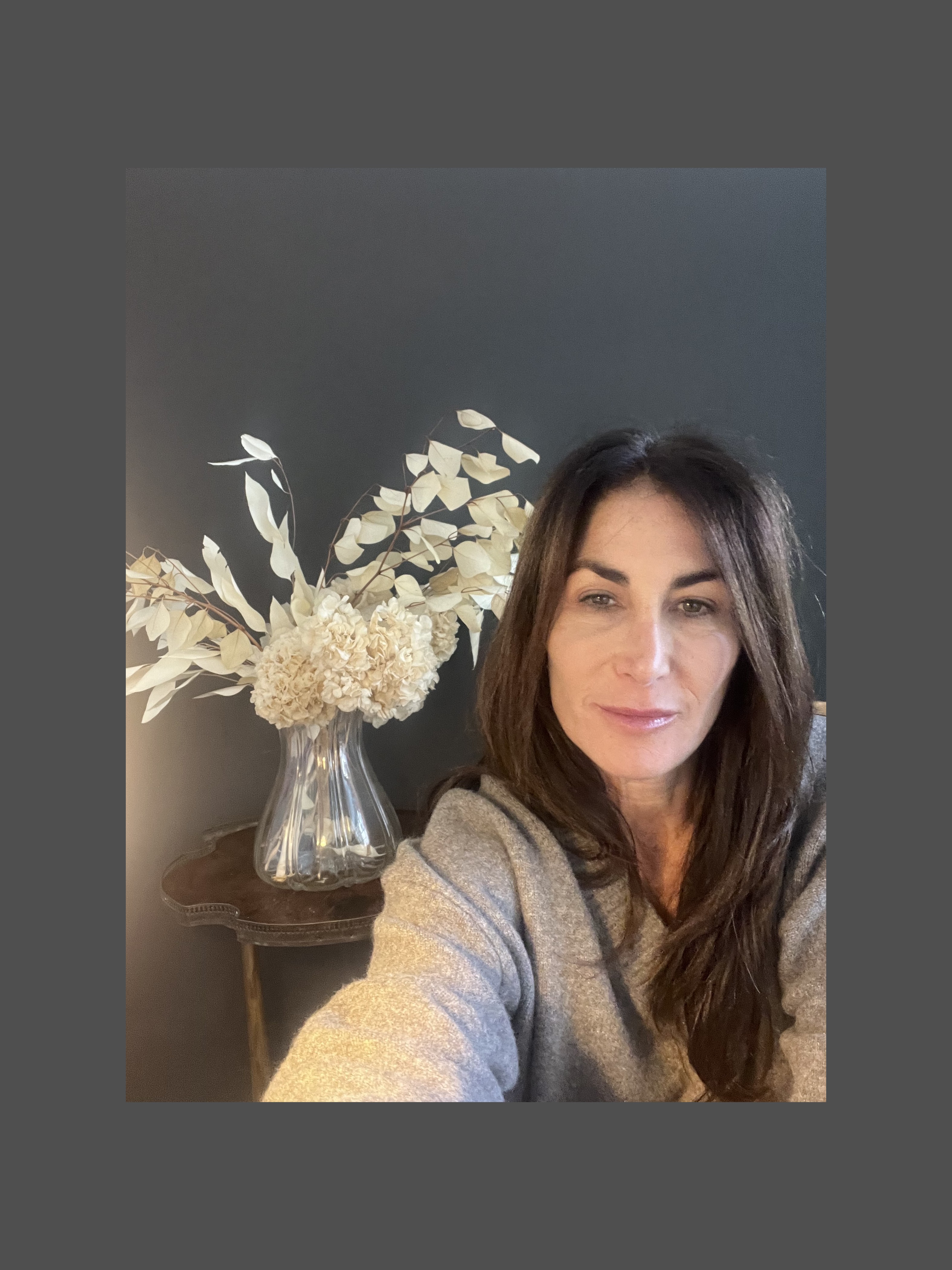
Tamara Rothbart, writer

About Your Writer

I'm Tamara Rothbart — a ghostwriter, editor, and documentary maker, with nearly thirty years spent turning other people's lives into unforgettable stories.

I was Features Director at Elle, an editor at Cosmopolitan and Marie Claire, twice named Sanlam Journalist of the Year, and chief writer for City Press's 100 World Class South Africans. I co-directed and produced Little Miss Tiny, a documentary screened at the Sithengi Film Festival. Since 2020, I've worked exclusively as a ghostwriter.

We don't really understand our own lives until we've told them as a story — until the scattered years resolve into something with a shape, a meaning, a throughline. That's the real work: helping you become the hero of your own narrative, at last, instead of a bystander in it.

That's what I do for every person I write for. Let's do it for you.

Two Ways to Tell Your Story

Prefer to write it yourself?

Everything above describes my interview-led service — I write the book for you. If you'd rather write it in your own hand, but want a thinking partner beside you, Story Coaching is a different path: open to anyone who wants to write their own book, with guidance, rather than hand it to a ghostwriter.

See Story Coaching →